Battle for England Invasion
A struggle for survival where vengeance ends and a path toward peace grows through friendship.

Following Canute's rise to power, the Farmland Arc marks the turning point where Thorfinn sheds his identity as a vengeful warrior. Set on Ketil's farm in Denmark, this arc forces Thorfinn to confront a harsh reality: true strength means saving those who cannot save themselves rather than slaughtering enemies. Standing alongside his fellow slave Einar during this period of hardship, he finally moves past the bloodlust that defined him.
- Key Protagonist
- Thorfinn
- Primary Antagonists
- Ketil's overseers and the brutalities of slavery
- Setting
- Denmark, specifically Ketil's farm
- Historical Context
- 11th-century Denmark under Canute's reign
- Narrative Arc
- The Farmland Arc
Lore & Background
For Thorfinn, this period represents the ultimate test of his philosophy of non-violence. Having spent years seeking to kill Askeladd, he now finds himself in a position where killing would be easy but choosing not to requires immense courage. The hardships of slavery force him to bond with Einar, a former farmer captured and enslaved, transforming their relationship from one of mutual distrust to deep friendship. It is during these turbulent times that the seeds of Vinland are truly planted, as Thorfinn realizes that a land without war can only exist if people choose to protect each other rather than destroy.
In Their Own Story
The rain fell hard on the muddy fields, washing away the fresh blood but not the memory of the screams. Thorfinn stood amidst the wreckage of a burning cart, his hands trembling not from fear, but from the weight of restraint. Across the field, Einar raised his axe, eyes wild with the fever of battle, ready to strike down another soul for glory. But as the blade descended, Thorfinn did not draw his own weapon; instead, he stepped forward into the path of death, a silent shield against the storm of violence that had defined their generation.
Reader's Guide
The invasion begins with the fragmentation of English authority following Sweyn's death, leading to opportunistic raids by Danish and local forces. Thorfinn, now working on Ketil's farm, finds his peaceful life shattered when mercenaries target the village for supplies and slaves. Unlike previous battles where he fought for revenge or survival, Thorfinn chooses to defend the villagers without taking lives, a radical departure from Viking norms. Einar, once a rival who sought to kill Thorfinn, is forced into an uneasy alliance as they both attempt to protect their communities from the invading horde. The conflict escalates as Floki and other veterans arrive, bringing their own agendas of conquest and glory. Through brutal skirmishes in the mud and rain, Thorfinn demonstrates that true strength comes from enduring pain rather than inflicting it. The battle concludes not with a decisive military victory, but with a shift in perspective among the survivors. The invaders are repelled through sheer will and unity rather than superior weaponry, leaving the land scarred but its people changed. This event solidifies Thorfinn's resolve to find Vinland, proving that peace is possible even in the darkest of times.
Did You Know?
- This arc serves as the narrative bridge between Thorfinn's life as a slave and his eventual journey to America.
- Einar was never a warrior—he was a farmer captured and enslaved, and his arc is about surviving slavery, not renouncing violence.
- The Farmland Arc takes place entirely in Denmark on Ketil's farm, not in England.
- Thorfinn's refusal to kill during his enslavement directly contrasts with his childhood self who sought only revenge.
Origins and Creative Evolution
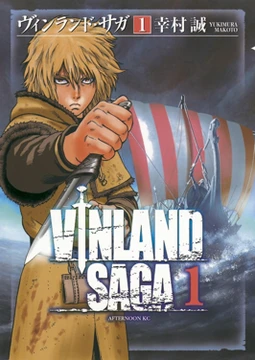
Makoto Yukimura's epic manga series began serialization in Weekly Shōnen Magazine before migrating to Monthly Afternoon, a shift reflecting its transition from a boys' audience to young adult men. While the narrative is loosely based on the historical Icelandic explorer Thorfinn Karlsefni, the story underwent significant conceptual changes during development. Yukimura originally intended to craft a tale about slavery inspired by King Olaf Tryggvasson, but his editor advised against making the protagonist a slave. Consequently, Thorfinn was reimagined as a Viking warrior, a decision that allowed the author to explore the tragedy of violence more deeply before the character's eventual redemption. Yukimura infused the narrative with personal reflections on global conflicts, projecting feelings related to the Cold War and the September 11 attacks onto the protagonist's psyche. This unique blend of historical fiction and personal philosophy transformed the work into a profound examination of how individuals overcome trauma to seek peace.
Narrative Arcs and Character Transformation
The story chronicles Thorfinn's dramatic evolution from a bloodthirsty teenager driven by vengeance against Askeladd, who killed his father Thors, to a pacifistic young man seeking a utopia. The initial War Arc depicts the chaos of the Danish invasion of England in 1013 AD, where Thorfinn serves as a mercenary under Askeladd amidst political intrigue involving King Sweyn and his sons. Following Askeladd's sacrificial death to secure Prince Canute's rise, a shocked Thorfinn is captured and sentenced to enslavement, marking the beginning of the Slave Arc. Under the guidance of fellow slave Einar and farmer Ketil, Thorfinn learns to value life over violence. This internal shift culminates in his confrontation with King Canute, where he advocates for mercy rather than retribution. The narrative later expands into the Eastern Expedition and Vinland Arcs, following Thorfinn's journey across Europe and eventually to Iceland as he gathers resources and companions to establish a peaceful settlement free from warfare.
Historical Context and Setting
Taking place in early 11th-century England, the series anchors its story in historical details from The Flateyjarbók and various sagas. The backdrop covers the Danish conquest under King Sweyn Forkbeard and the subsequent power struggle between his sons, Harald and Canute. Fictional events wrap around real figures like Thorkell the Tall, the legendary Jomsviking leader, and explorer Leif Erikson. As the plot moves forward, locations shift from England's violent battlefields to Denmark's farms, then to Iceland and the shores of Vinland. This movement lets the story examine diverse cultural interactions, such as the relationship between Viking settlers and the native Mi'kmaq people in North America. By rooting these events in genuine historical periods and places, the series looks at how political instability and culture clashes shape individual destinies.
Critical Reception and Adaptations
Since its inception, the manga has achieved significant commercial success and critical acclaim, with over seven million copies in circulation by August 2022. Its high quality was recognized early on when it secured the Grand Prize at the 13th Japan Media Arts Festival in 2009 and later won the Kodansha Manga Award for Best General Manga in 2012. Critics have consistently praised the series for its compelling storytelling, intricate artwork, complex character development, and deep thematic exploration of war and peace. The popularity of the source material led to two major anime adaptations: a 24-episode first season produced by Wit Studio aired from July to December 2019, followed by a second season by MAPPA between January and June 2023. Licensed for English publication by Kodansha USA, the series has reached a global audience, cementing its status as a modern classic that resonates with readers through its universal message of reconciliation and hope.
Frequently Asked Questions
What is the Battle for England Invasion in Vinland Saga?
This term refers to the chaotic conflict occurring during Canute's reign where various factions fight for control of England amidst foreign threats. It serves as the dramatic backdrop for Thorfinn's transition from a vengeful warrior into a protector who values life over death.
Who are the main characters involved in this battle?
Thorfinn is the central protagonist, while his primary adversaries include Einar, Floki, and various mercenary forces. These conflicts force Thorfinn to confront his past and redefine his understanding of true strength.
Where does this invasion take place?
The events unfold across England's coastal regions and farmlands during the historical period following Canute's conquest. This setting provides a stark contrast between the brutality of war and the peaceful life Thorfinn seeks to protect.
What is the significance of this event for Thorfinn's character arc?
This battle marks the pivotal moment where Thorfinn realizes that true power comes from saving those who cannot save themselves rather than killing enemies. It effectively ends his journey of vengeance and initiates his path toward peace and redemption.
How does the story resolve during this invasion?
The conflict concludes with a blood-soaked clash that symbolizes the death of Thorfinn's vengeful past and the birth of his new philosophy. This resolution bridges the Farmland Arc and the climax of the Canute Saga, establishing a foundation for future peace.