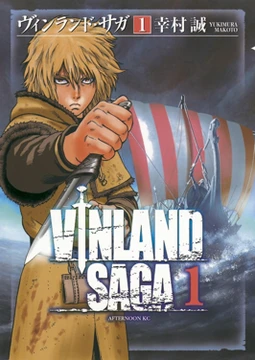
Floki's Farm
A craftsman's sanctuary where legends are built from wood and ambition.

Floki's Farm refers to the personal homestead and shipbuilding estate established by the legendary craftsman Floki in Iceland. This property serves as a sanctuary for his family and a workshop for his ambitious vessel designs. While Floki later travels to England to serve under Sweyn Forkbeard and Canute, his farm remains in Iceland and is never relocated. Though not a military faction like the Jomsvikings, it functions as a crucial hub for naval innovation and political maneuvering within the series.
- Primary Location
- Iceland
- Affiliation
- Independent, later Danish forces under Sweyn Forkbeard and Canute
Lore & Background
Throughout the series, Floki's farm remains a private homestead in Iceland, never becoming a state-sponsored shipyard. Floki's shipbuilding for the Danish forces occurs in England or on campaign, not at a relocated farm. This distinction highlights Floki's complex morality; he builds tools of war for foreign kings while remaining a devout pagan craftsman and pragmatic political player. Unlike Thorfinn, Floki does not secretly dream of discovering Vinland—that ambition belongs to the younger generation.
In Their Own Story
The cold wind bit at Floki's hands as he traced the grain of the oak hull. Around him, the silence of the Icelandic coast was broken only by the rhythmic strike of his adze. He looked toward the small wooden house where his wife tended the fire and his children slept. This land was not for conquest, but for creation. Every plank laid here was a prayer to the gods of the sea, waiting for the day the ship would finally sail west.
Reader's Guide
Floki's Farm operates primarily as a production hub rather than a combat unit. Its goal is the construction of superior vessels that can navigate the treacherous North Atlantic waters. The members include Floki himself, his immediate family, and various hired laborers or slaves who assist in the timber work. Unlike warrior bands, this faction plays a logistical role in the broader conflict. By providing ships to kings like Sweyn and Canute, Floki influences the balance of power between England and Denmark without drawing his own sword. His loyalty is transactional; he serves those who fund his shipbuilding dreams. Ultimately, the farm represents the intersection of technology and ambition in a violent age. It is where the means to explore new worlds are forged amidst the backdrop of feudal warfare.
Did You Know?
- Floki built ships in Iceland before traveling to England to serve under Sweyn Forkbeard and Canute, but his farm itself never moved from Iceland.
- Floki meets Sweyn Forkbeard in Denmark or England, not at his farm in Iceland—their alliance is forged far from the homestead.
Origins and Thematic Evolution
Makoto Yukimura's epic saga began serialization in Weekly Shōnen Magazine before transitioning to Monthly Afternoon, a shift reflecting its maturation from a boys' series to a young adult narrative. While the story dramatizes the historical expedition of Thorfinn Karlsefni, its core inspiration stems from King Olaf Tryggvasson and Yukimura's personal reflections on global conflict, including the Cold War and the September 11 attacks. Initially conceived as a tale about slavery, editorial feedback led to the protagonist being reimagined as a Viking warrior. This change allowed the author to explore the tragedy of violence more profoundly; Thorfinn must first understand the devastation he caused as a fighter before embracing his later pacifism. The narrative arc traces his transformation from a bloodthirsty teenager driven by revenge against Askeladd for his father's death into a man seeking Vinland, a mythical sanctuary where diverse peoples coexist without war.
Narrative Arcs and Character Growth
The story unfolds across distinct historical periods, beginning in England during the Danish invasion of 1013 AD. The War Arc introduces Thorfinn as a mercenary under Askeladd, culminating in the villain's self-sacrifice to secure Wales and Thorfinn's subsequent enslavement after failing to assassinate Prince Canute. Two years later, the Slave Arc sees Thorfinn working on Ketil's farm, where he befriends Einar and learns to value life through agricultural labor. This period marks his shift from vengeance to pacifism, highlighted by his confrontation with King Canute regarding the seizure of the farm. The Eastern Expedition Arc expands the scope as Thorfinn travels to Greece to finance a journey to Vinland, gathering a diverse crew including Gudrid and Karli. Finally, the Vinland Arc depicts the realization of his dream: establishing a peaceful settlement in North America where wheat is cultivated, weapons are unnecessary, and harmonious relations with the native Mi'kmaq people are forged.
Critical Acclaim and Commercial Success
Since its inception, the series has achieved remarkable commercial success and critical recognition within the manga industry. By August 2022, circulation figures had surpassed seven million copies globally, a testament to its widespread appeal across different demographics. The work's literary quality was formally acknowledged when it secured the Grand Prize at the 13th Japan Media Arts Festival in 2009 and later received the prestigious Kodansha Manga Award for Best General Manga in 2012. Critics have consistently praised the series for its intricate storytelling, detailed artwork, complex character development, and profound thematic exploration of war and redemption. Licensed for English publication by Kodansha USA, the manga has reached a broader international audience, solidifying its status as a modern classic that bridges historical fiction with deep philosophical inquiry regarding human nature and societal conflict.
Adaptations and Visual Interpretation
The narrative's reach extended beyond print through two major anime television adaptations produced by renowned studios. The first season, consisting of 24 episodes, was animated by Wit Studio and broadcast from July to December 2019, bringing the early war-torn chapters to life with dynamic action sequences. Following this success, MAPPA took over production for the second season, which aired between January and June 2023, focusing on the character's evolution during his time as a slave and his journey toward peace. These adaptations have been instrumental in introducing Yukimura's vision to new audiences, visually interpreting the transition from the brutal Viking age to the hopeful settlement of Vinland. The anime series faithfully captures the historical setting drawn from sources like The Saga of Erik the Red while emphasizing the emotional weight of Thorfinn's internal struggle and his ultimate quest for a land free from violence.
Frequently Asked Questions
What is Floki's Farm?
It is the personal homestead and shipbuilding workshop established by the master craftsman Floki for his family and designs.
Where is Floki's Farm located?
The property starts in Iceland as an independent sanctuary before moving to England under King Canute.
What is the primary function of this group?
It serves as a hub for naval innovation and agriculture rather than acting as a traditional military fighting force.
Who leads Floki's Farm?
Floki commands the estate himself, utilizing his unique skills to construct vessels that support royal political ambitions.
Why is Floki's Farm significant in Vinland Saga?
The base provides essential shipbuilding technology that influences power struggles between kings and shapes the series' naval conflicts.